How to Wear a Running Belt (Without the Bounce)
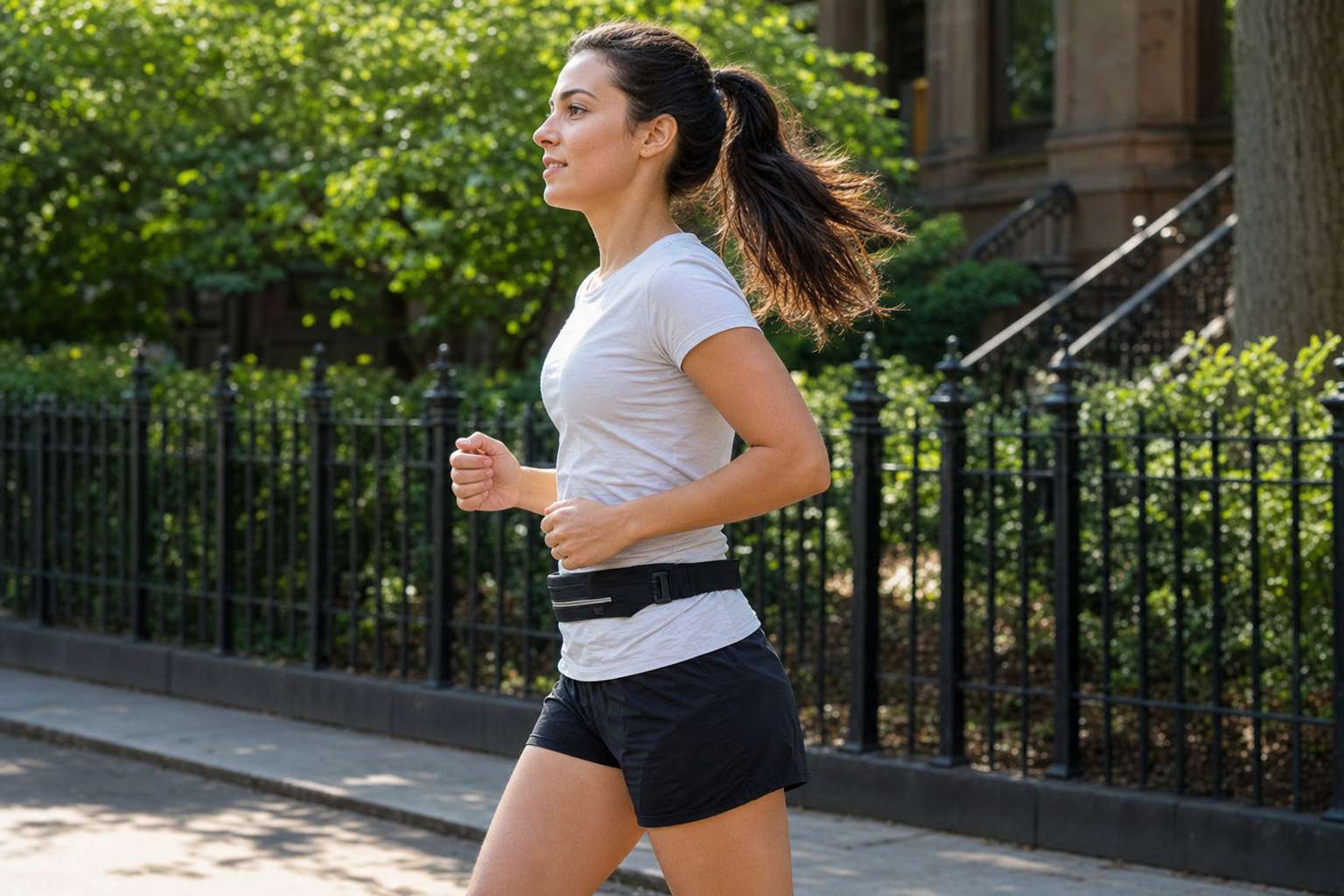
Wear a running belt snug, not tight, positioned high on your natural waist, just above the hip bones. The single biggest fix for a bouncing belt is fit: snug enough that it does not move, with the weight balanced evenly around your body. Get those two things right and the belt disappears while you run.
Position and loading matter almost as much as the snugness of the fit. A belt worn too low will slip and ride up with every stride. A belt loaded unevenly will swing toward the heavy side.
Do not have a belt you like yet? Our running belt buying guide breaks down the best options by need, including the lowest-bounce picks.
Where to position a running belt
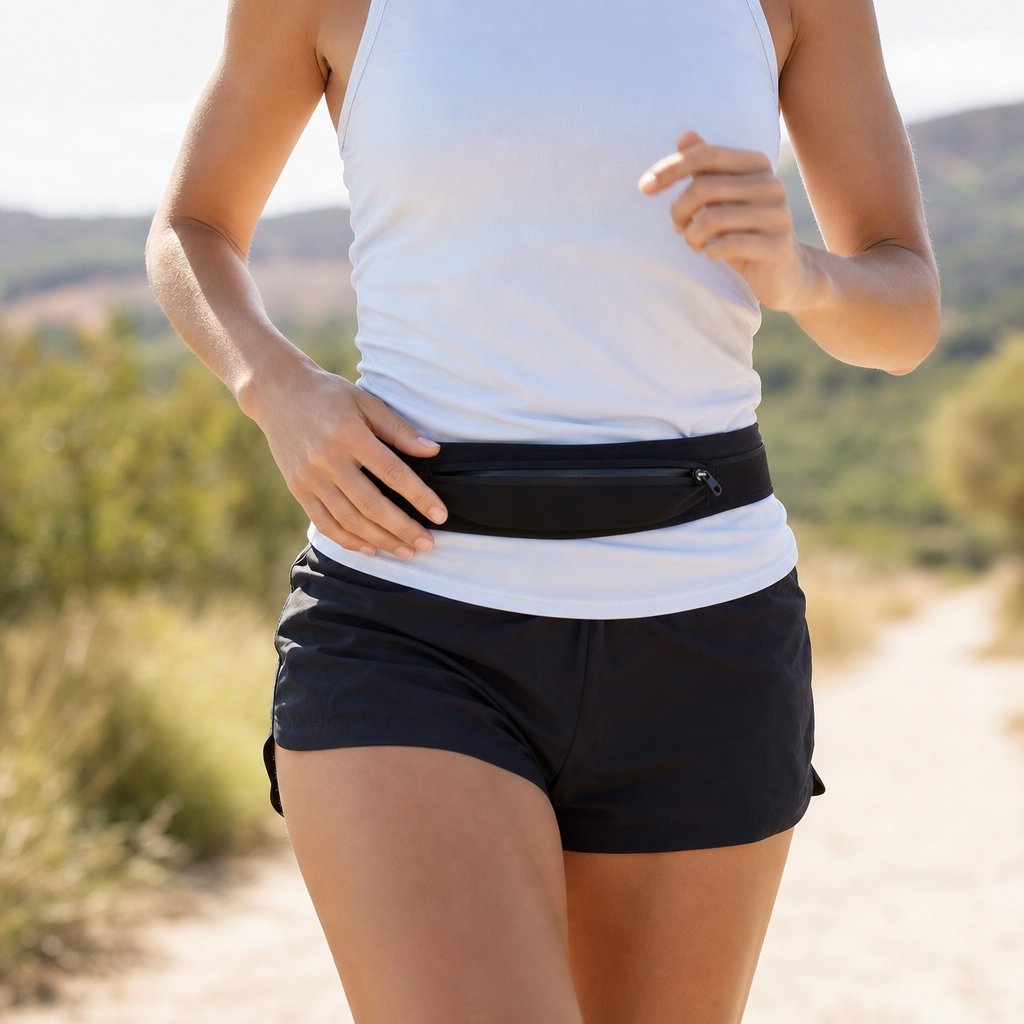
Wear the belt high on your waist, roughly at belly-button level, not down on your hips. Hips move more than your waist does, and a belt riding on them will slide and bounce with every step.
- Too low: sits on the hips, slips down, rubs, and bounces.
- Too high: digs into your ribs and feels restrictive when you breathe hard.
- Just right: sits at or just above the belly button, snug against the waist.
You can also rotate the belt around your body depending on what you are carrying. Keep a phone at your back or side rather than dead center in front, so it does not dig in when you bend forward.
How to get the fit right (and stop the bounce)
A running belt should feel snug, almost like a firm handshake around your waist, never painfully tight. Bounce almost always comes down to one of a few fixable problems.
- Loose strap. Tighten it until the belt cannot shift when you tug it side to side.
- Empty pocket space. A half-full pocket lets contents shift and slap against your body. Fill the gaps or size down.
- Uneven load. Balance weight across both sides of the belt instead of stacking everything on one hip.
- Loose tail. Tuck any extra strap so it is not flapping.
Before you head out the door, do a quick jump-and-jog test in place. If anything shifts or bounces, adjust now rather than a mile into your run. Belts built with a wide, flat band, like the FlipBelt, tend to hold this kind of snug fit with the least bounce.
How to load it so it stays put
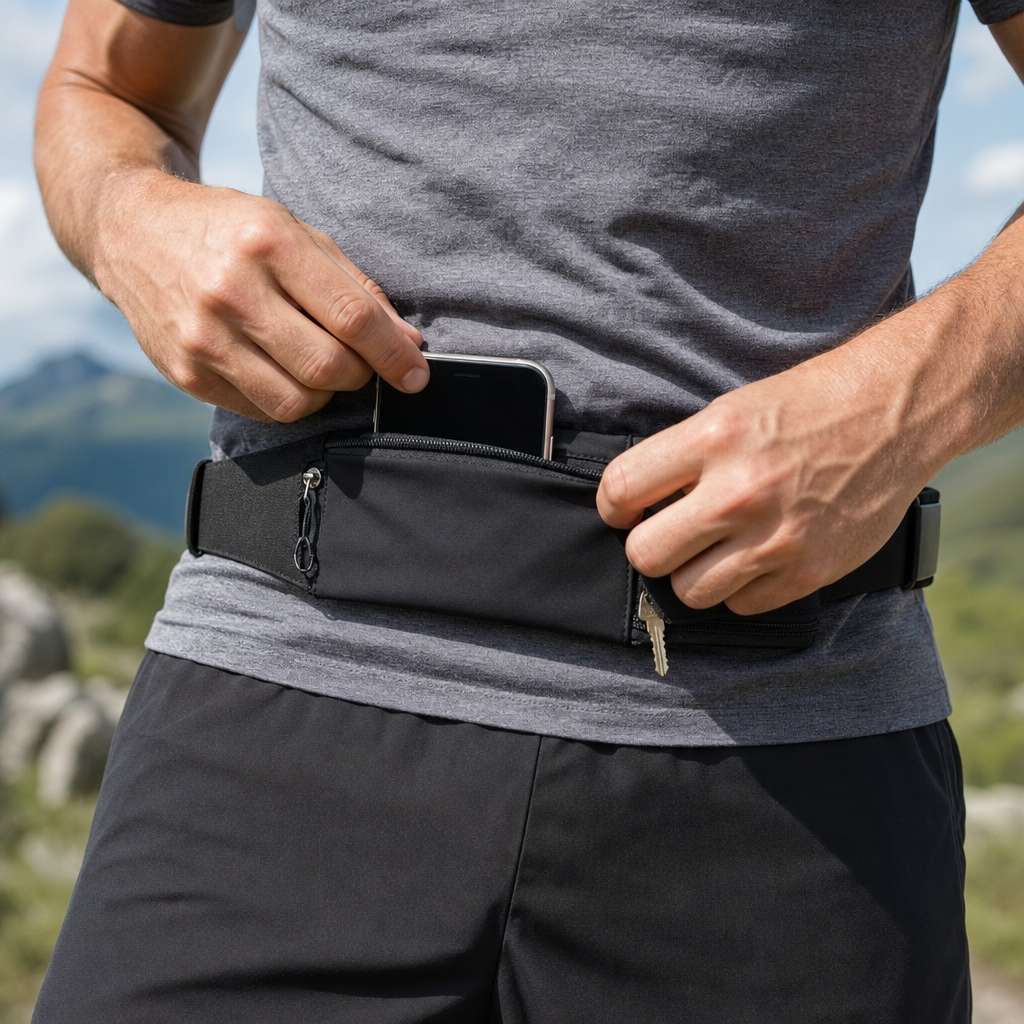
Put your heaviest item, usually a phone, centered against your lower back, and balance everything else around it. An uneven load is one of the most common causes of a belt that twists or sags to one side.
- Center the heaviest item against your back or lower back.
- Split smaller items, like keys or gels, evenly between the front and sides.
- Do not overstuff the pockets. An overstuffed belt stretches out, sags, and bounces.
- Add filled water bottles or flasks last, right before you head out.
That last point matters more than it sounds. Loading a bottle early means condensation and small spills soak into everything else in the pocket. Fill and insert bottles right before you leave.
On longer runs, aim for about half a cup of water every 10 to 15 minutes. The full breakdown is in how much water you actually need on a run. Carrying more than a phone and a key? A dedicated hydration belt spreads bottle weight around your waist instead of stacking it in one pocket.
Over or under your clothes?
Wear the belt under an untucked shirt for the cleanest look and the least bounce. Wear it over your shirt if you need fast access to what is inside. Under your shirt, the fabric holds the belt closer to your body and dampens movement. Over your shirt, you can grab your phone or a gel without lifting anything.
In cold weather, keep your phone against your body rather than in an outer layer. Body heat keeps the battery from draining fast, and a belt worn snug under a jacket does this well.
Fit tips for different bodies
There is no single correct spot. Your natural waist is whatever sits just above your hip bones and below your ribs. A few adjustments help most runners get there faster.
- Shorter torso: the natural waist sits higher, so you may need to cinch the belt tighter than the default setting.
- Longer torso: the natural waist sits lower and closer to the hips, so watch for slipping and size down if needed.
- Women’s cuts curve in at the waist and sit comfortably above the hips. They avoid the straighter, boxier fit of a men’s belt.
- Adjustable or elastic straps, and extenders on some models, widen the range of sizes a single belt fits well.
If a belt still will not sit right after you adjust the strap, the size or shape is likely wrong for your body. That is not a fit you can force.
Common questions
Should a running belt be tight or loose?
Snug, not loose and not painfully tight. You should be able to breathe and move freely, but the belt should not shift when you tug it.
Where should you wear a running belt, waist or hips?
Your natural waist, not your hips. The waist moves less during a stride, so the belt stays put instead of sliding down.
Why does my running belt keep bouncing?
Almost always a loose strap, empty pocket space, or an uneven load. Tighten the fit, fill the gaps, and balance the weight side to side before you rule out the belt itself.
Can you wear a running belt over a jacket?
Yes, but under a jacket usually works better in cold weather. Wearing it underneath keeps your phone warmer and keeps the belt from sliding on slick outer fabric.
The bottom line
Wear it snug, high on your natural waist, with the weight balanced on both sides, and jump-test it before you leave the house. Load heavy items last and centered, fill bottles right before you go, and rotate the belt so nothing digs in as you run.
Get the fit right and the belt stops being something you think about. Still looking for the right one? The best running belt guide has current picks for every kind of runner, from low-bounce daily wear to long-run hydration setups.