
Should You Wear Underwear With Running Shorts? (Liner Yes or No?)
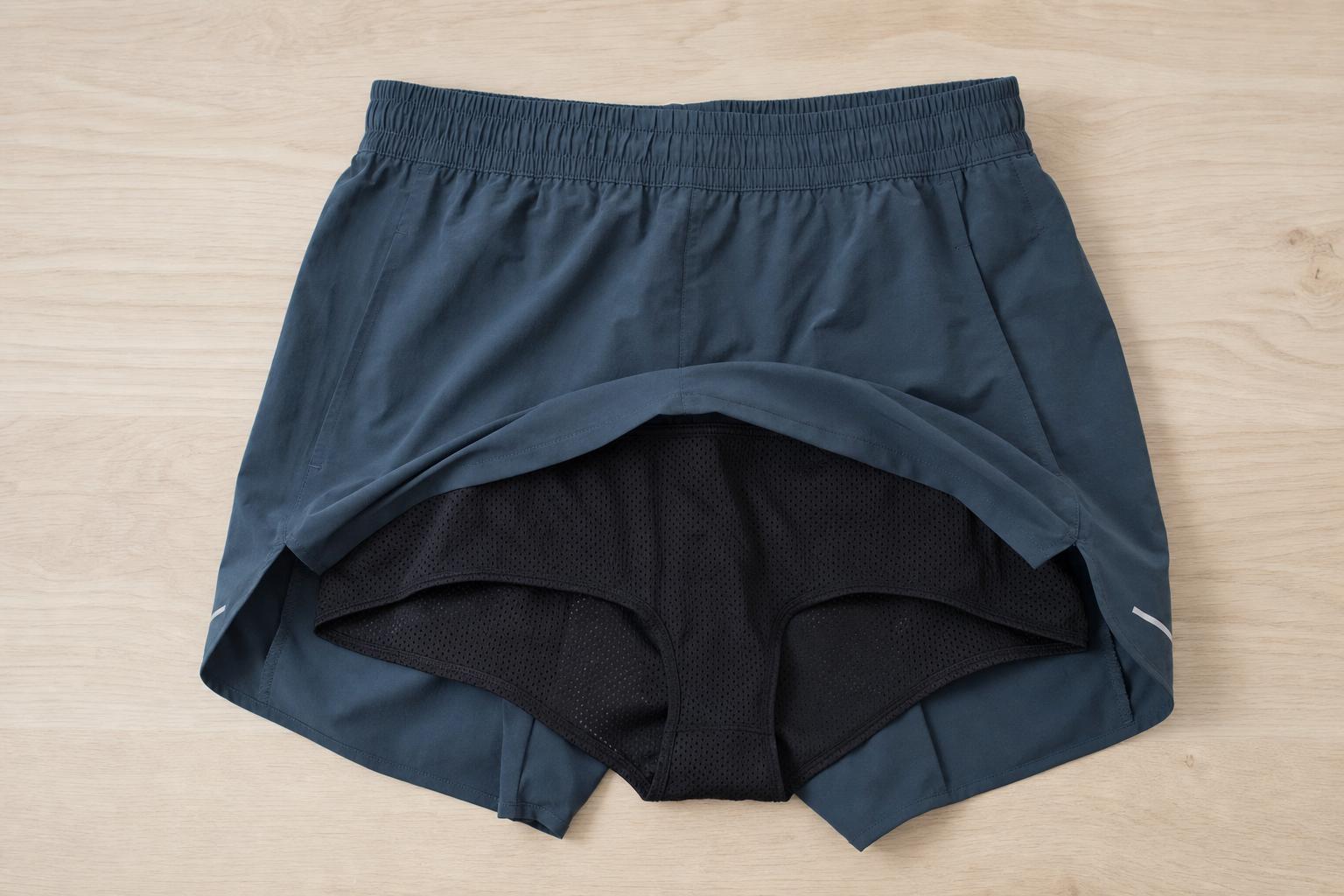
Most running shorts come with a built-in liner. It is a thin brief or compression layer sewn inside, designed to sit directly against your skin with no underwear underneath.
The short answer is no: you do not need to wear underwear. Going without is usually the more comfortable choice.
The exception is unlined shorts, which have no liner and are meant to be worn with underwear. The mistake to avoid is pulling a pair of regular cotton underwear under a lined short.
That traps sweat and causes exactly the chafing the liner is there to prevent.
The right shorts setup also helps prevent chafing, and the right anti-chafing product covers the spots clothing cannot. Our guide on how to prevent chafing when running covers the rest.
That covers the quick answer. The rest of this guide explains what the liner actually does and why cotton underwear under lined shorts backfires.
It also covers the few situations where wearing underwear still makes sense. Comfort is the real goal.
Once you understand how each piece works, the right call becomes easy.
The short version, by short type
Whether you need underwear comes down to one thing: does the short already have a liner? Here is the rule for each common style.
- Lined running shorts. The built-in brief is your underwear. Skip the separate pair. This is the most common type of running short.
- Boxer-brief and 2-in-1 shorts. These have a snug inner layer with light compression. There is no room for an extra layer. Adding one defeats the design. Wear them on their own.
- Compression shorts and tights. They only work when the fabric presses against bare skin. Wear them next to the body with nothing underneath.
- Unlined running shorts. No liner inside, so here you do wear underwear. Choose a moisture-wicking, seamless pair rather than cotton.
If you are not sure which kind you own, the easiest tell is to turn the shorts inside out. A sewn-in brief or a second snug panel means they are lined.
For a fuller breakdown of each style, see our guide to the different types of running shorts.
What the liner actually does
The liner is not just spare fabric. It is a purpose-built layer that replaces underwear and does the job better for running. A well-made one handles four things at once.
It wicks sweat. Liners are made from technical synthetics that pull moisture away from your skin and let it evaporate.
The area stays drier than it would under ordinary underwear. Dry skin keeps you cool and comfortable on a long effort.
It prevents chafing. The liner stretches and moves with you, stopping the friction that leads to raw skin between the thighs.
Chafing starts when sweat gets trapped against the skin under a layer that does not breathe. A good liner is designed to avoid exactly that.
It gives light support and keeps everything in place. For men, the liner holds things in position and adds a measure of modesty while running.
For women, a women’s liner is cut closer to the body to do the same. It is not a substitute for a jockstrap or a sports bra.
For everyday running, though, it does the job.
It stops the shorts riding up. The liner is attached to the shorts.
The whole garment stays put instead of working its way up mid-run. We go deeper on the engineering in our piece on why running shorts have built-in underwear.
Why cotton underwear under lined shorts is a problem
This is the single most common running-apparel mistake. When you wear a cotton brief under a lined short, you stack a layer that holds water on top of a layer engineered to move it away.
The results work directly against you.
- Trapped sweat. Cotton absorbs moisture and holds onto it instead of wicking it out. The fabric stays wet against your skin for the whole run.
- More chafing, not less. Wet fabric plus repeated motion causes raw skin and irritation. That is the exact opposite of what the liner is meant to deliver.
- Bunching and ride-up. An extra waistband and seams under snug shorts shift and fold as you move. This creates pressure points and forces you to adjust mid-stride.
- More heat. Every added layer traps warmth in an area that needs to breathe. You end up hotter and sweatier than you would be with the liner alone.
If you have only ever run in cotton underwear and assumed running was just uncomfortable and sweaty, this is very often the reason.
Letting the liner do its job on its own tends to fix the problem on the very next run.
When wearing underwear still makes sense
Going linerless is the default for most runners, but it is a default, not a rule. There are legitimate reasons to wear underwear.
You are wearing unlined shorts. This is the clear-cut case. Unlined shorts have no built-in brief, so underwear is part of the outfit. Reach for a technical, moisture-wicking pair rather than cotton.
Personal comfort and preference. Some runners do not like the feel of a bare liner.
Others find a particular short’s synthetic fabric irritating against sensitive skin. If that is you, wearing thin technical underwear is completely fine.
You give up a little of the liner’s wicking efficiency, but comfort that keeps you running is the thing that matters.
You want a barrier under a shared or rental garment, or on certain days. A light extra layer for hygiene or peace of mind is a reasonable choice in those situations.
The one consistent guideline across all of these: if you are going to wear underwear, choose seamless moisture-wicking running underwear made from a technical fabric, not cotton. Seamless means fewer edges to rub.
A wicking fabric works with the liner instead of against it.
Advice for women and men
Anatomy differs, and so do the liners built for it. A few points are worth calling out by gender.
For women
Women’s lined shorts use a brief cut closer to the body, shaped to sit comfortably and stay in place. For most runs, that liner is all you need, worn on its own.
If you find the fabric irritating, a thin seamless technical brief is a sensible choice. It will not undo the liner’s wicking the way cotton would.
During a period, wearing your own protection along with the liner is perfectly reasonable. A moisture-wicking pair keeps things comfortable.
Skorts pair a skirt with a built-in compression underlayer. They work the same way as a lined short.
For men
Men’s liners run a little longer and offer more support. For everyday running they hold everything in place well enough that no underwear is needed.
If your priority is maximum support for harder efforts, the liner alone may not be enough. In that case, a jockstrap worn in place of underwear is the better tool than a regular brief.
If you currently wear boxers under your shorts and they keep riding up and bunching, drop them and let the liner work.
Keeping it clean
Because the liner is the layer against your skin, treat your shorts the way you would treat underwear. Wash them after every run rather than re-wearing.
Sweat and bacteria collect in the liner just as they would in a regular brief. Technical fabrics dry quickly, so a normal wash gets them ready for the next day without fuss.
The general rule for running clothes applies here too: skip the fabric softener. It can coat the fibers and reduce how well they wick.
If you really do not like the liner
Some runners prefer their own underwear and would rather not deal with a built-in brief at all. If that is you, the honest move is to buy unlined shorts and pair them with the technical underwear you like.
Do not cut the liner out of a lined pair. Snipping a liner free is easy to get wrong, and you end up with a rougher finish than a purpose-made unlined short.
Buying the right garment for how you actually want to run is simpler and lasts longer.
The bottom line
For lined running shorts, which is most of them, the liner is your underwear. Wear the shorts on their own and let that layer wick sweat and prevent chafing the way it was built to.
Save separate underwear for unlined shorts, or for personal comfort. When you do wear it, choose a seamless moisture-wicking pair over cotton.
The one habit to drop for good is cotton underwear under a lined short. Keep the area cool and dry, and the rest comes down to whatever feels best on your run.