
Why Do Running Shorts Have Built-in Underwear? (6 Benefits of Liners)
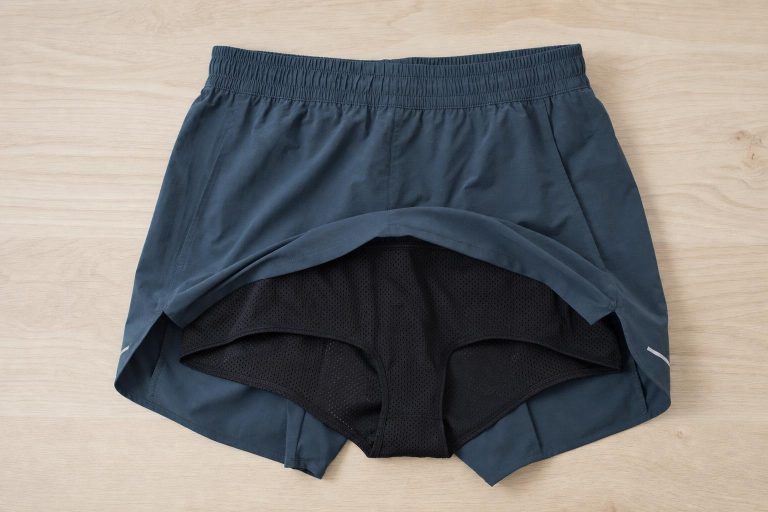
Running shorts have a built-in liner because the outer shell alone cannot do everything a runner needs. The liner is a separate inner layer, usually a brief or a short compression panel, sewn into the shorts.
It handles moisture, friction, support, and coverage all at once. That makes it a purpose-built replacement for underwear, not a design quirk or an afterthought.
The main reasons the liner exists
Manufacturers settled on the built-in liner because runners kept running into the same problems without one. The liner solves all of them in a single layer.
- Moisture wicking. The liner is made from technical synthetics, typically polyester or nylon blends, that pull sweat away from your skin and push it toward the surface where it can evaporate. Ordinary underwear fabric, especially cotton, works the opposite way: it absorbs and holds moisture. On a run, that means wet fabric pressing against your skin for miles. The liner keeps the area closer to dry, which matters for both comfort and temperature regulation.
- Chafing prevention. This is the big one. Chafing happens when sweat-soaked fabric rubs repeatedly against skin, and running produces a lot of both. The liner stretches with your stride, so there is no bunching or shifting that creates friction points. The material is smooth rather than seamed, and because it sits snug against the body it does not fold or ride. A good liner turns a common running injury into a non-issue.
- Support and motion control. For men, the liner gives good support and keeps everything safely in place while running. It reduces bounce without requiring the compression of a jockstrap. It also adds a measure of modesty when the outer shell is lightweight or has a high split. For women, the liner is cut closer to the body and shaped to provide coverage and stay put through the same movements. Neither version replaces dedicated compression gear for high-intensity efforts, but for everyday running both do the job.
- Keeping the shorts in place. Because the liner is stitched to the shorts, the whole garment moves as one piece. There is nothing underneath to bunch, shift, or ride up the leg mid-run. Runners who have worn separate underwear know the feeling: it rides up, you chase it, it breaks your rhythm. A properly lined short eliminates that entirely.
Men’s liners and women’s liners
The liner is not a one-size-fits-all component. Men’s and women’s running shorts use different cuts to match anatomy.
Men’s liners typically run a little longer in the inseam and are shaped with a pouch to hold everything in position. The brief-style liner is the most common, and it gives enough support for easy to moderate running.
For harder efforts or longer races, some men prefer compression shorts over the liner, or replace lined shorts with a jockstrap worn under an unlined shell. The liner handles everyday training well.
What it does not replace is maximum support for sustained high-output running.
Women’s liners are cut shorter in the inseam and shaped to sit flush against the body without gaps. They provide coverage and wicking where women’s anatomy needs it most, and the better-made ones feel like wearing very little at all.
Women who find a liner irritating often find the fix is a different brand. Fit and fabric vary considerably across manufacturers.
In both cases, the liner is designed to be worn next to bare skin. Wearing underwear underneath adds a layer that works against the liner’s wicking, and usually adds friction rather than reducing it.
For the full reasoning on what to wear under lined shorts, the should you wear underwear with running shorts guide covers the decision in detail.
Brief liners versus compression liners
Not all liners are the same, and the type of liner affects how a short feels and who it suits.
- Brief-style liner. The most common type. Looks like a standard brief sewn into the shorts. Light, minimal, and suited to most training runs. Gives support and coverage without compression.
- Compression liner or 2-in-1 design. A snug inner short, usually reaching mid-thigh, that provides compression along with coverage. These are heavier than brief liners but reduce muscle fatigue on longer runs and offer more coverage for runners who prefer it. The 2-in-1 design pairs this inner layer with a looser outer shell.
- Mesh liner. Some shorts use a lightweight mesh brief that prioritizes airflow over compression. Common in shorter race shorts where ventilation matters more than support.
Which type suits you depends on distance, intensity, and personal feel. Trying each liner style over a few runs is a faster way to find out than reading about it.
When shorts do not have a liner
Not every running short includes a liner, and there are real reasons a manufacturer might leave one out.
Unlined shorts are designed to be worn over compression tights or with your own choice of underwear. This suits runners who already wear compression tights for muscle support and do not want a redundant layer on top.
It also suits runners who simply prefer to choose their own underwear rather than use what comes built in.
Some race shorts are sold unlined to keep weight to an absolute minimum, on the assumption that the runner is already wearing compression underneath.
The easiest way to tell whether your shorts have a liner is to turn them inside out. A sewn-in brief or a snug inner panel means they are lined.
If all you see is the back of the outer shell, they are unlined and designed to be worn with something underneath.
For a breakdown of each short style and how liners fit into them, see the guide to different types of running shorts.
A note on care
Because the liner is the layer against your skin on every run, treat your shorts the same way you treat underwear. Wash them after each run.
Technical fabrics dry quickly, so a normal machine wash and air dry gets them ready by the next day. Skip the fabric softener.
It coats the fibers and reduces how well the liner wicks over time. Treat it like the functional layer it is, not like casual shorts you can re-wear a few times.
The short answer
Running shorts have a built-in liner because running creates conditions that require a dedicated inner layer. Sustained sweat, repeated friction, and constant movement all need to be managed at once.
The liner wicks moisture, prevents chafing, supports and covers, and keeps the whole garment in place. All in a single thin layer that adds almost no weight.
That combination is why virtually every purpose-built running short includes one, and why it works better against bare skin than layered over separate underwear.