FlipBelt vs SPIbelt: Which Running Belt Should You Buy?
The FlipBelt is the better pick if you carry a lot and want zero bounce. The SPIbelt wins if you carry little, want one size to just work, and want to spend less.
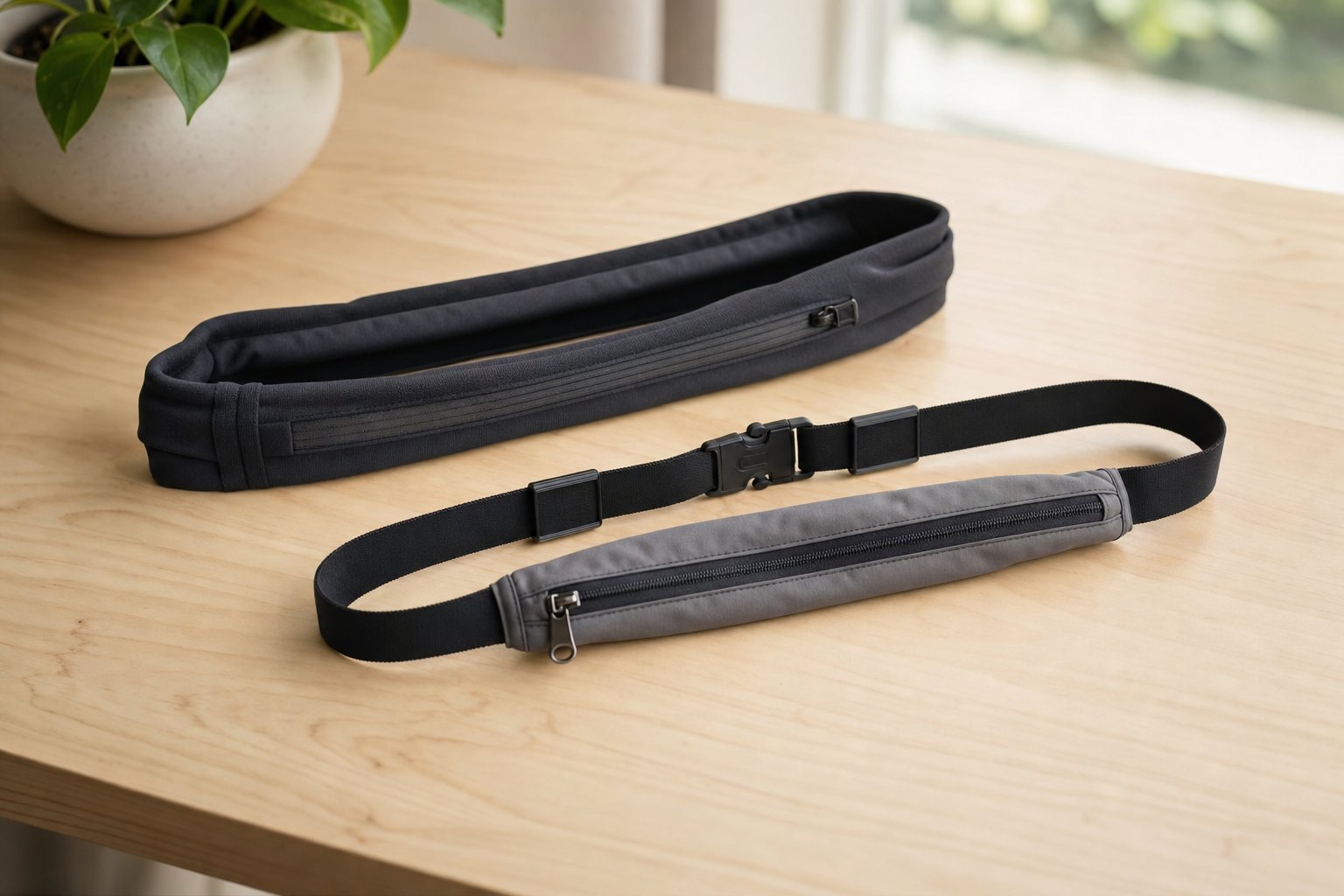
Both belts solve the same problem in different ways. FlipBelt is a sized continuous tube that hugs the hips like a waistband.
SPIbelt is a small expandable pouch on an adjustable strap. This guide compares them across design, capacity, bounce, fit, price, and use case, then gives a verdict by runner type.
At a glance
- Design: FlipBelt is a continuous tube with multiple openings. SPIbelt is a single expandable pocket on a strap.
- Capacity: FlipBelt spreads gear around the whole waist. SPIbelt holds less but still fits a large phone.
- Bounce: Both are built to sit still. FlipBelt’s sized tube edges out SPIbelt’s strap when packed heavy.
- Sizing: FlipBelt needs a waist measurement and a size chart. SPIbelt is one size with an adjustable band.
- Price: SPIbelt costs less. FlipBelt Air runs about $48, SPIbelt Original about $30.
- Best for: FlipBelt for carrying a lot. SPIbelt for a simple phone-and-key setup.
FlipBelt Air
The FlipBelt Air is the lighter version of the Classic tube, with the same multiple-opening design and sized fit. It sits flat on the hips and carries a phone, keys, and small items through separate access points.

SPIbelt Original
The SPIbelt Original is a small expandable pocket on a soft adjustable strap. One size covers a wide range of waists, and the pocket stretches to fit a large phone plus a few small items.

Design
The FlipBelt (Classic and Air share the same tube design) is one continuous band of stretch fabric with no buckle.
It has multiple openings around its circumference plus an internal key hook, so gear stays sorted instead of sliding into one pile.
The tube is sized to your waist and worn snug. It sits like a second layer of clothing rather than an accessory strapped on top.
The SPIbelt takes the opposite approach. It is a single small pocket sewn onto a soft elastic strap.
There is no buckle to speak of on the Original, just an adjustable band that cinches to fit. Fewer parts means less to go wrong, but also less organization inside.
Capacity
FlipBelt’s several openings let you separate a phone from keys from gels. That spreads the weight around your waist instead of stacking it in one spot, which is what makes a full FlipBelt still sit flat.
The SPIbelt pocket looks small at rest but expands to fit large phones, plus a card or two and a key. If you only carry a phone and a key, the SPIbelt’s single pocket is plenty.
Carry more than that regularly and the FlipBelt’s multiple compartments make more sense.
Bounce
Bounce comes from two things: how snug the belt sits and how the weight is distributed. FlipBelt’s sized tube, worn at the correct size, sits like a second skin and spreads weight evenly.
SPIbelt is also built to be bounce-free, and its adjustable strap can be cinched tight enough to stay put for a phone and a key.
Load it heavier and a single pocket on one side can shift more than a FlipBelt’s spread-out load. For most runners carrying light, either one stays still.
Sizing and fit
This is the biggest practical difference between the two. FlipBelt is sized XXS to XL by waist measurement, and getting that size right matters.
Too loose and it spins and bounces. Our FlipBelt size guide walks through the measurement and the chart.
SPIbelt sidesteps that problem. Its soft elastic adjustable band fits roughly 24 to 47 inch waists in one size.
If you are between FlipBelt sizes or do not want to measure and check a chart, SPIbelt removes that step entirely.
For general placement and wear tips that apply to either belt, see our guide on how to wear a running belt.
Price
SPIbelt Original runs about $30. FlipBelt Air runs about $48. That gap holds across most of the FlipBelt line compared to the SPIbelt Original.
If budget is the deciding factor, SPIbelt is the cheaper way into a no-bounce belt. FlipBelt costs more, but the multiple openings and sized fit are what you are paying for.
Use cases
Marathon and long-run carriers who need gels, a phone, and keys separated do better with a FlipBelt. Its multiple openings mean nothing has to share space or get lost at the bottom of one pocket.
That matters several hours into a long training run.
Short runs, gym sessions, or anyone who just wants a phone and a key out of their hands fit the SPIbelt well. It is also a reasonable first belt if you are not sure you will stick with wearing one.
Travelers like the low profile too, since it tucks under a shirt without printing through like a bulkier pack. See our roundup of the best running belts for the full lineup across minimal and high-capacity options.
For women’s-specific sizing notes, check our women’s running belts guide.
Bottom line
Carry a lot and want the closest thing to zero bounce? Get the FlipBelt. Want the simplest setup with no sizing to figure out? Get the SPIbelt.
Between sizes or unsure which FlipBelt size to order? SPIbelt’s adjustable band skips that problem entirely.
On a budget, the SPIbelt is the cheaper way to stop your phone from bouncing. Either way, fit is what makes a belt disappear on the run.