How to Prevent Chafing When Running
Chafing is friction, made worse by sweat and the salt it leaves behind. It happens when skin rubs on skin or on fabric, over and over, for miles. You prevent it three ways: cut the friction, fix the moisture, and cover the hot spots. Cutting friction means an anti-chafe balm and the right fit. Fixing moisture means wicking fabric and never cotton. Covering the hot spots means a lubricant, tape, or guards where you rub most. Sort those three out and most running chafe simply stops.
That is the short answer. The rest of this guide explains what actually causes the burn, where it shows up, and the exact steps that keep your skin smooth on long, sweaty runs.
What causes chafing when you run
The mechanism is simple. Repeated rubbing wears at the skin until it turns red, raw, and sore. A single stride does nothing. Thousands of them, with a damp surface dragging across your skin, is what does the damage.
Sweat is the accelerant. As it dries it leaves tiny salt crystals on your skin and clothing. Those crystals add grit to every rub, like fine sandpaper. According to REI’s expert advice on managing chafing, moisture and salty sweat are central to why the friction turns into a raw patch.
- Longer runs raise the risk. More miles means more rubbing cycles and more time for skin to break down.
- Heat and humidity make it worse. You sweat more, fabric stays wet longer, and salt builds up faster.
- Poor fit is a hidden cause. Loose fabric flaps and bunches, while a rough seam saws at one spot the whole way.
The common hot spots
Chafing tends to strike the same places on most runners. Knowing your hot spots tells you exactly where to apply balm before you head out. These are the usual offenders.
- Inner thighs. The classic running chafe, where skin rubs skin stride after stride. Worst in shorts that ride up.
- Underarms. Arms swinging against the torso or a sleeve seam create a steady rub for the whole run.
- Groin. The crease where the leg meets the body collects sweat and rubs against a waistband or short liner.
- Nipples. Known as jogger’s nipple, this is a shirt seam dragging across the nipple for miles. It can sting and even bleed.
- Sports-bra and waistband lines. Any band that holds firm against the skin can rub, especially along the bra seam or a short’s waist.
- Feet. Damp socks and seams cause blisters, which is friction on the same principle as skin chafe.
Prevention 1: get the fabric right
Your clothing is the first line of defense, and it is the cheapest fix. The single biggest rule is to never run in cotton. Cotton soaks up sweat and holds it against your skin, keeping the surface wet and primed to chafe.
Reach for technical synthetics instead. Moisture-wicking fabric pulls sweat off the skin and lets it evaporate, so you stay drier and rub less. REI’s chafing guidance points to synthetic, sweat-wicking materials over cotton for exactly this reason.
Fit and seams matter just as much as the fabric. Choose a snug layer that moves with you, not one that bunches or flaps. Look for smooth, flat seams, since a thick raised seam is often the real culprit on the underarms or chest.
Prevention 2: use a lubricant
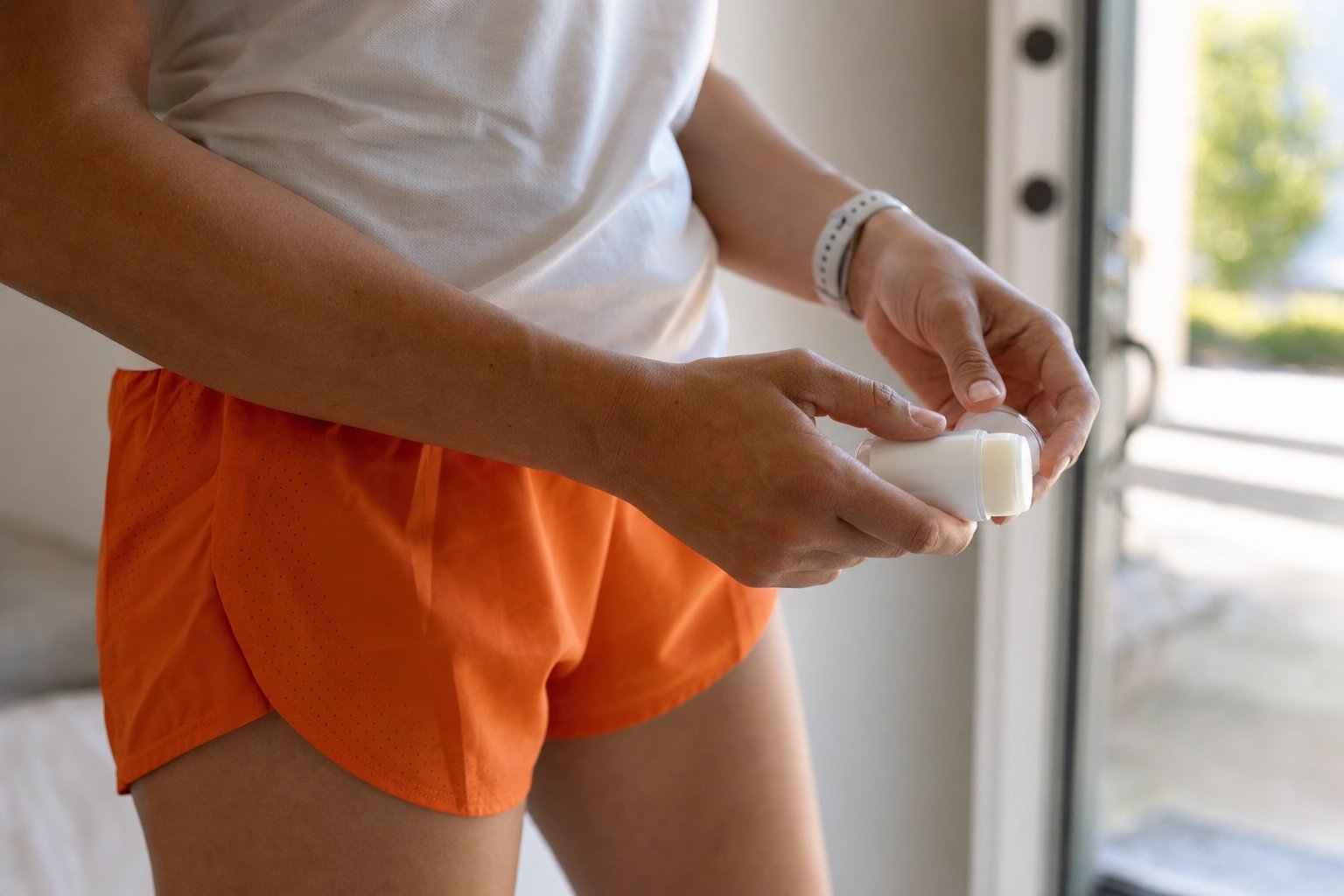
When you cannot remove the rubbing, you can make it slippery. A thin layer of anti-chafe balm lets surfaces glide instead of grab. This is the trick experienced runners rely on for long races and humid days.
Apply it before the run, not after the burn starts. Cover every hot spot you know you have. A dedicated anti-chafe balm such as Body Glide goes on dry and lasts for miles, while plain petroleum jelly is a cheap, effective backup. You can pick up an anti-chafe balm for a few dollars, and one stick lasts a long time.
Reapply on very long efforts. Sweat and miles will eventually thin the layer, so a quick top-up on an ultra-distance run keeps the protection going.
Prevention 3: cover the thighs
Inner-thigh chafe is the most common complaint, and the fix is mostly about what you wear on your legs. The goal is a smooth layer between your thighs so skin never rubs directly on skin. Two approaches work well.
- Compression shorts or tights. A snug second-skin layer keeps the thighs from touching at all. Wear them on their own or under looser shorts.
- Lined running shorts. The built-in brief and longer inseam styles keep fabric where the rubbing happens instead of letting skin meet skin.
The wrong shorts can cause the problem they should solve. If you are unsure whether to wear anything under a lined pair, our guide on whether you should wear underwear with running shorts clears it up. To match a style to your body and distance, see the breakdown of the different types of running shorts.
Prevention 4: protect your nipples
Jogger’s nipple is almost entirely preventable, and it matters most on long runs. The longer you run, the more a shirt seam saws at the nipple, so distance is the real trigger. Cleveland Clinic notes that covering or lubricating the nipples is the way to head off this kind of chafe.
- Balm. A dab of anti-chafe balm or petroleum jelly on each nipple cuts the friction for shorter outings.
- Surgical tape. A small strip of tape or a plaster over each nipple is the most reliable fix for a long race.
- Nipple guards. Purpose-made covers stick in place and shield the area for the full distance.
A soft, seamless technical shirt helps on its own. Pairing the right fabric with a cover on long runs is the surest way to never feel that particular sting.
How to treat chafing you already have
Sometimes the burn beats you to it. Treat a raw patch gently and give it time, because rubbing it again is what turns a minor chafe into a real wound. WebMD’s guidance on chafing centers on cleaning the area, soothing it, and protecting it while it heals.
- Clean it gently. Rinse the area with mild soap and water, then pat it dry. Do not scrub.
- Soothe it. Apply a soothing ointment or a barrier balm to calm the skin and lock in some moisture.
- Let it heal. Give the patch a day or two before your next hard effort, and keep it clean and dry in between.
- Do not re-rub it raw. If you must run, cover the spot and load up on lubricant so you are not grinding the same skin again.
See a doctor if it does not settle. A chafe that blisters badly, cracks, oozes, or shows signs of infection needs medical attention, not another run. Most cases, though, clear up on their own with a little patience.
Your quick pre-run checklist
Run through these five points before you head out the door. Two minutes of prep beats a week of waiting for raw skin to heal.
- No cotton. Pick moisture-wicking synthetic fabric for every layer touching your skin.
- Balm the hot spots. Hit your inner thighs, underarms, groin, and nipples before you start.
- Check the fit. Wear a snug layer with smooth, flat seams, not something that bunches or flaps.
- Cover the thighs. Use compression or lined shorts if skin-on-skin is your usual problem.
- Sort your gear. A belt that rides up rubs your waist, so a steady running belt that stays put earns its place.
Chafing is friction plus sweat plus salt, and every one of those is something you can control. Cut the friction, fix the moisture, cover the hot spots, and the burn stops being part of running. Get the system dialed once, and you will barely think about it again.