The Best Running Belts for Women in 2026 (No Bounce, Real Pockets)
The best running belt for most women is the FlipBelt Classic. It lays flat on the hips, holds a large phone, and does not bounce.
The right pick still depends on what you carry and how you like a belt to sit. This guide covers five belts that each solve a different problem. It also covers the sizing rules that stop bounce before it starts.

1. FlipBelt (Classic or Air): best overall
The FlipBelt Classic and the lighter Air version share the same design: a continuous stretch tube with no buckle. It hugs the hips like a waistband and holds a phone, keys, and gels through four openings.
Sized right, it gets as close to zero bounce as a belt can. Measure your waist and check the size chart before ordering. Our short guide on how to wear a running belt shows the placement that works best.


2. SPIbelt Original: best minimal pick
The SPIbelt looks tiny at rest. Its small pocket then stretches to swallow a large phone, cards, and a key.
The band is a soft adjustable elastic, so one belt covers a wide range of waist sizes. It stays flat and quiet on easy runs. If you only carry a phone and a key, this is all the belt you need. SPIbelt is also a woman-founded company from Austin, Texas. For a direct head to head with the FlipBelt, see our FlipBelt vs SPIbelt comparison.

3. FlipBelt Zipper: most secure
The Zipper model keeps the Classic fit and adds a zippered pocket with an inner key hook. Cards, cash, and keys stay locked in over any terrain.
Choose this one if losing what you carry is not an option. We reviewed it separately in our FlipBelt Zipper review if you want the full detail.

4. Nathan Trail Mix Plus: best with hydration
Past an hour, you want water with you. The Trail Mix Plus carries two flasks in angled holsters you can draw one-handed. A front pocket fits most phones.
This is the pick for long runs and hot weather. We compare more options in our roundup of the best running hydration belts.

5. E Tronic Edge: best budget pick
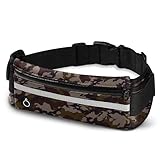
This is a light neoprene pouch on an adjustable strap. It fits waists from about 22 to 50 inches, has a headphone port, and a reflective logo for dark mornings.
It costs less than half of most sized belts and covers the basics well. A good first belt if you are not sure you will use one.
How a running belt should fit a woman
Fit decides everything with a belt. Get it right and you forget you are wearing one.
- Snug on the hips or natural waist. A belt that can spin around you will bounce once a phone goes in.
- Size down when between sizes. Stretch belts loosen slightly with use. Our FlipBelt size guide has the full chart.
- Plan around high-waisted leggings. Most women wear the belt just above the leggings waistband or right over it. Both work, so try each on a short run first.
- Soft, wide fabric beats a thin cord. A wide band spreads the load and will not dig in or chafe.
A sized tubular belt worn snug is the closest thing to a no-bounce guarantee. For the full comparison across all models, see our guide to the best running belts.
Belt or leggings pocket?
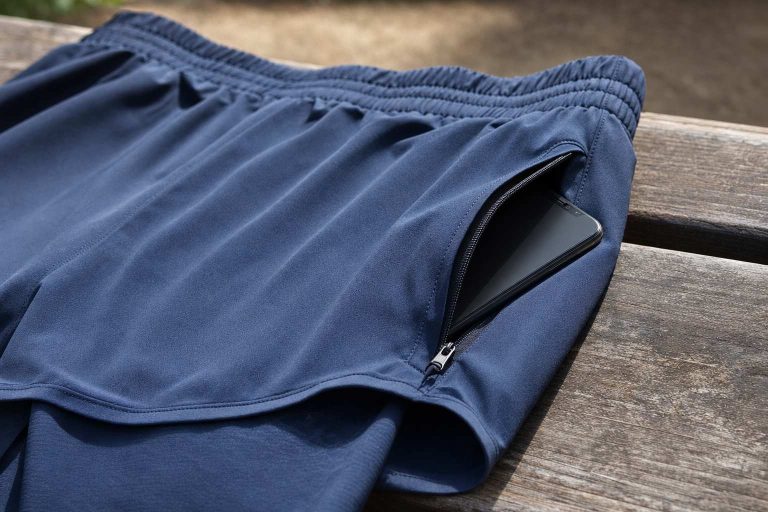
Side pockets on good leggings handle a phone fine on short runs. Add keys, cards, and a gel, and the pocket starts to sag and bounce.
A belt spreads that weight around your waist and keeps it still. Our guide on how to carry your phone while running compares every option, and we also cover the belt versus armband question separately.
Bottom line
Most women are happiest with the FlipBelt Classic. It fits flat, carries everything, and stays put.
Go SPIbelt for a minimal phone-and-key setup, or FlipBelt Zipper for locked-in security. Nathan Trail Mix Plus covers long-run hydration, and E Tronic Edge covers a tight budget. Whichever you pick, get the size right and wear it snug.