How to Carry Your Phone While Running (6 Ways That Work)
Phones keep getting bigger and running clothes keep not having pockets. That is the whole problem.
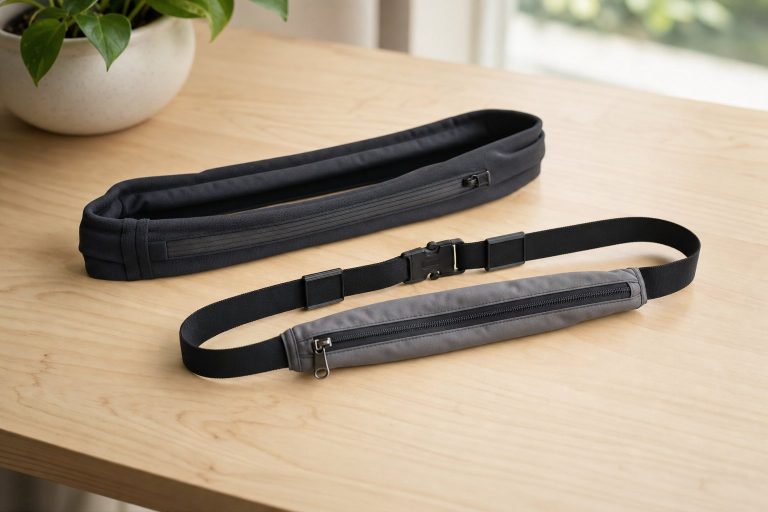
For most runners on most runs, an elastic running belt worn snug at the waist is the answer. It sits flat, it stops bouncing once the size is right, and it takes keys and a card as well.
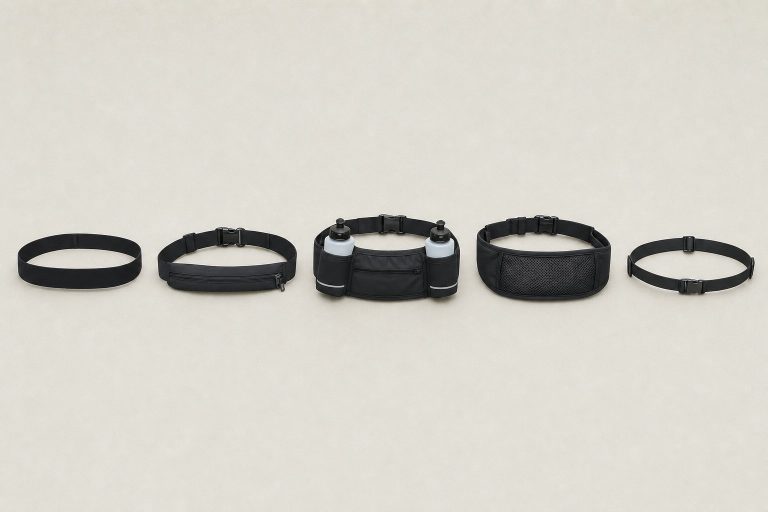
Below are the six carry methods that actually work, and when each one is the right pick. The four places you should never put a phone come after them.
The short answer, by run type
Match the method to the run in front of you.
- Everyday easy runs. A running belt. Nothing else is simpler.
- Long runs and hot days. A hydration belt or a vest, because you need water anyway.
- Short runs where you want the screen. An armband, so you can see it without stopping.
- Races and hard efforts. Shorts or tights with a real zippered pocket, so nothing extra is strapped on.
- Trails and anywhere remote. A vest, because the phone travels with water and a jacket.
- Winter. Anything worn under a layer, because cold flattens the battery. Our winter running guide covers that in full.
1. A running belt
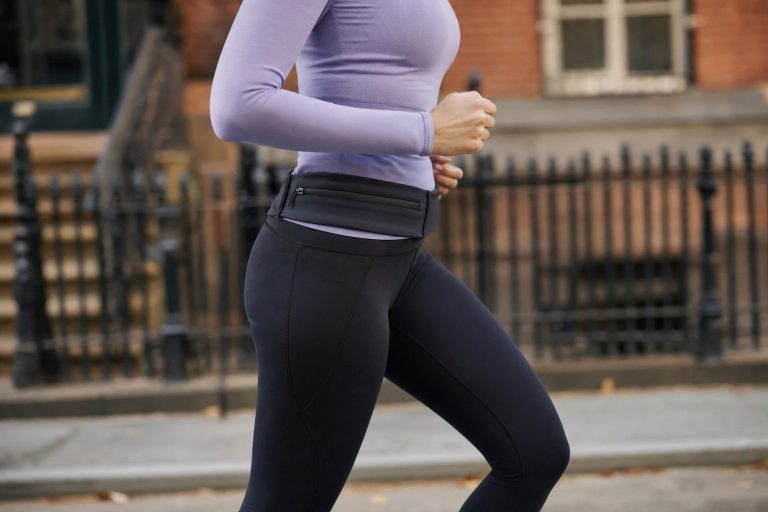
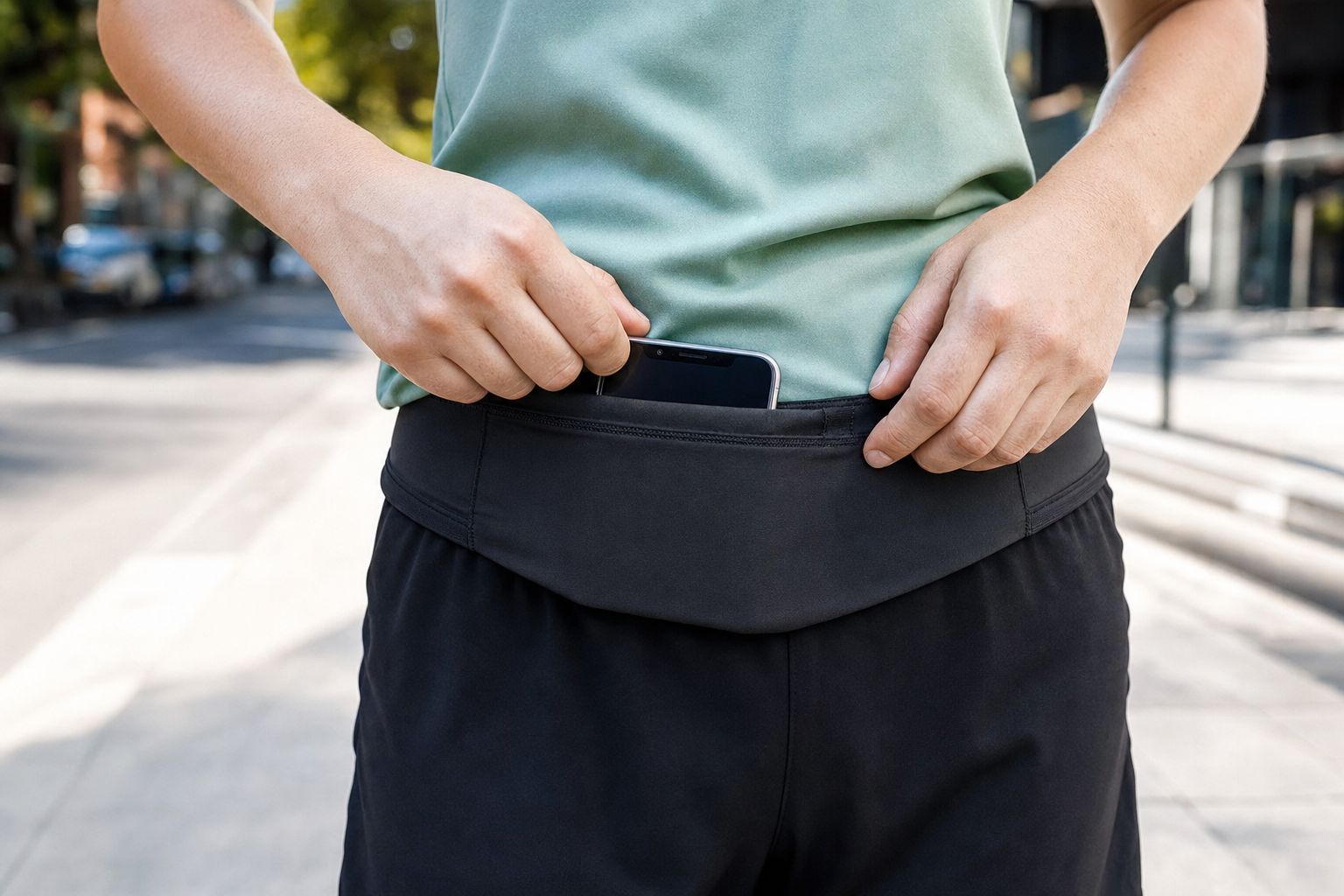
This is the default, and the one to try first. An elastic belt sits at your natural waist and holds the phone flat against your body.
Once the size is right it stops existing. That is the whole test of a running belt.
Fit decides everything here. Too loose and it rides up your ribs, too tight and it digs in at the waistband.
Our guide to how to wear a running belt covers the adjustment, and what size FlipBelt to get covers sizing for the most common model.
![SPIbelt Running Belt Original for Women Men, Phone Holder for Running, Running Fanny Pack, Holder for Phone, Running Waist Pack, Adjustable Waist, [Fits All Phones]. Black with Blue Zipper](https://m.media-amazon.com/images/I/31anaEMhfxL._SL160_.jpg)
For the full comparison, see our running belt guide.
2. Shorts or tights with a zippered pocket
If your clothing already carries the phone, there is nothing to strap on at all. This is the cleanest solution when it works.
The catch is that most running shorts still have no pocket worth using. A phone in an open side pocket swings, and a phone in a waistband slides.
What you want is a zippered pocket on the thigh or the back of the waistband, cut large enough for a phone in its case. Compression tights hold a phone better than loose shorts, because the fabric pins it against your leg.


Our roundup of running shorts with pockets has the picks, and the types of running shorts explains which cut suits which run.
3. An armband
Pick an armband when you want to read the screen without stopping. Nothing else puts the phone where you can see it.
Look for a sweatproof cover you can tap through and a slot for a card. Reflective trim is worth having on dark mornings.
The honest downside is size. Large phones look bulky on an arm, bounce more, and need constant readjusting between too loose and too tight.
A loaded arm also changes how that arm swings, which over a long run changes your stride.
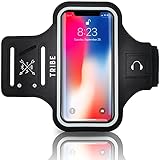
See our armband picks, or read running belt versus armband if you are choosing between the two.
4. A hydration belt
Once a run needs water, the belt that carries the water can carry the phone too. That is one item instead of two.
Bottle counts run from one to four. A single large bottle sits heavy on one side, while several small ones spread the weight around the waist.
The trade-off is access. The phone lives in a pouch behind you, so checking it means stopping and digging.

Our hydration belt guide covers the bottle layouts in detail.
5. A hydration vest
For long trail runs, a vest is the only option that carries everything at once. Water, a jacket, food and the phone.
Vests put the load on your shoulders and chest rather than your waist, which most people find steadier over hours. Front pockets sit where you can reach them while moving.
It takes a few runs to get used to. That is normal and it passes.



See our hydration vest picks for when a belt is not enough.
6. A handheld bottle with a phone sleeve
This one is worth it only if you were already carrying water in your hand. Do not pick up a bottle just to hold a phone.
The design is sound. A strap across the back of your hand takes the grip out of it, and a sleeve on the bottle holds the phone.
The cost is real, though. One loaded hand swings differently from the other, and arm swing is doing real work while you run. Our piece on arm swing explains what that changes.
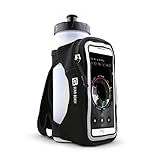
Our handheld bottle guide has the picks.
Where not to put your phone
Four places cost you either the phone or your form. None of them is worth the convenience.
- Bare in your hand. One trip and the screen is gone, and your grip tightens your whole arm for the entire run.
- Loose inside a sports bra. It works its way down as you pick up the pace and it sits in your sweat. A bra with a proper zippered pocket is a different thing and is fine.
- Inside a sock or a compression sleeve. The sleeve is meant to press evenly on your calf, and a phone pressing into already tender skin is not that.
- In your shoe or under the laces. Your foot hits the ground more than a thousand times a mile, so this ends exactly how you expect.
The rule underneath all four is simple. A phone that is not held flat against your body will move, and a phone that moves is one you stop taking with you.
Keeping it dry and keeping it alive
Sweat gets everywhere under a belt or a waistband. A cheap sandwich bag around the phone solves it and costs nothing.
Rain needs the same trick plus a jacket pocket you trust, which our guide to running in the rain covers.
Cold is the one that surprises people. Lithium batteries lose capacity in the cold, so a phone in an outside pocket can drop from half charge to dead in minutes.
Wear it under your layers in winter and your body heat keeps it running.
The bottom line
Start with a running belt, and only move to something else when the run demands it. Water means a hydration belt or a vest. Wanting the screen means an armband.
The right carry is the one you stop noticing. If you are adjusting it mid-run, the size is wrong, not the method.
If an armband is specifically what you want to avoid, the answer is a belt first, then shorts or tights with a zippered pocket. Both keep the phone off your arm completely.